MP5 FRT Install Guide: Drop-In Trigger Upgrades That Work Right Now
Struggling to keep your trigger finger fast enough during rapid fire? The MP5 FRT is a forced reset trigger system engineered to deliver near-binary speed while retaining the MP5’s familiar, reliable blowback action. It works by mechanically returning the trigger forward before the bolt cycles fully, letting you fire each round with a crisp, short-reset pull ps90 frt trigger that feels almost automatic. You install it in minutes using standard lower parts, then train your pull to stay light and steady—unlocking a cadence that outpaces any stock trigger without sacrificing control.
What Exactly Is an MP5 FRT and How Does It Differ From a Standard Trigger?
The MP5 FRT, or forced reset trigger, is a drop-in replacement pack that mechanically cycles the trigger blade forward after each shot, mimicking full-auto function while remaining legally semi-automatic. Unlike a standard MP5 trigger, which relies on your finger to manually reset the sear, the FRT uses the bolt’s rearward travel to physically push the trigger forward, so your trigger finger is *carried* through the reset. This creates a dramatically faster cyclic rate—roughly 700–900 rounds per minute—versus a standard single-action trigger’s limited speed. The key difference is that the standard trigger has a crisp, predictable break and a tactile reset, while the FRT trades that precision for aggressive, bump-fire-like cadence, demanding a stiff, flat-finger grip to avoid outrunning the bolt. The nuance is that the FRT’s reset timing is unforgiving: if you slacken your pull mid-magazine, you’ll dead-trigger, so consistent, high-pressure input is non-negotiable.
Defining the Forced Reset Technology in Plain Language
In plain language, a forced reset trigger (FRT) uses the weapon’s own recoil and bolt carrier movement to physically push the trigger forward back to its reset position *before* your finger fully releases it. Unlike a standard trigger, which relies on a spring to reset only after you let go completely, an FRT’s sear and disconnector are designed so the bolt’s forward travel actively “forces” the trigger shoe into the ready position. Because your finger never leaves the trigger face, you simply apply and relax pressure rhythmically, and the mechanism re-engages the hammer on its own. For an MP5, this means the bolt’s short, fast reciprocation works with the trigger geometry to produce rapid, predictable shot cycles without altering the gun’s closed-bolt operation.
- You do not need to time your finger release; the bolt does the work.
- The trigger resets even under sustained forward pressure, unlike a mil-spec trigger’s passive return.
- The MP5’s roller-delayed bolt provides consistent force to trip the forced reset reliably.
- You retain frt 15 trigger full semiautomatic safety—one trigger pull per hammer drop, but the reset is mechanically accelerated.
Key Mechanical Differences You’ll Feel at the Trigger Finger
The most immediate difference at the trigger finger is reset length and force curve. A standard MP5 trigger uses a long, stacking pull with a distinct wall and a slow, springy reset. An FRT (forced reset trigger) eliminates the wall entirely, relying on the bolt’s forward motion to physically push the trigger back into your finger, creating a rhythmic, percussive cycle. You’ll feel a shorter, sharper break with almost no over-travel, but the reset is aggressive—it actively shoves your trigger finger forward, demanding a relaxed grip to avoid short-stroking. The sear’s release point also sits higher, rare breed triggers in stock so the pull feels lighter but more abrupt than a mil-spec’s rolling break.

- Trigger finger feels a mechanical push on reset, not a spring return.
- The pull weight is consistent, but the break is crisp and sudden, not mushy.
- There is no tactile wall—just a continuous, bolt-driven cycle.
- Over-travel is near zero, but the forced reset adds a distinct forward slap.
How Does the Forced Reset Mechanism Function Step by Step?
The MP5 FRT (forced reset trigger) functions by using the bolt’s rearward travel to physically push the trigger forward after each shot. Step one: after the hammer falls, the bolt carrier begins its rearward stroke. Step two: as the bolt moves back, a cam or lever on the carrier engages a protrusion on the trigger, forcing the trigger shoe forward out from under your finger. Step three: this forward movement resets the sear while your finger is still held down. Step four: as the bolt returns forward, it strips a new round, and the trigger is now free to be pulled again—but only after the user releases slight pressure, allowing the trigger to move rearward once more. The cycle repeats only if your finger maintains consistent pressure, creating a rapid reset without automatic sear. Q: Does the MP5 FRT require a modified bolt? A: Yes, it needs a specific carrier profile to actuate the reset lever, unlike a standard MP5 bolt. The timing is critical: if the bolt’s forward stroke is too fast or slow, the trigger may not reset, causing a dead trigger.

Understanding the Bolt Carrier’s Role in Resetting the Trigger
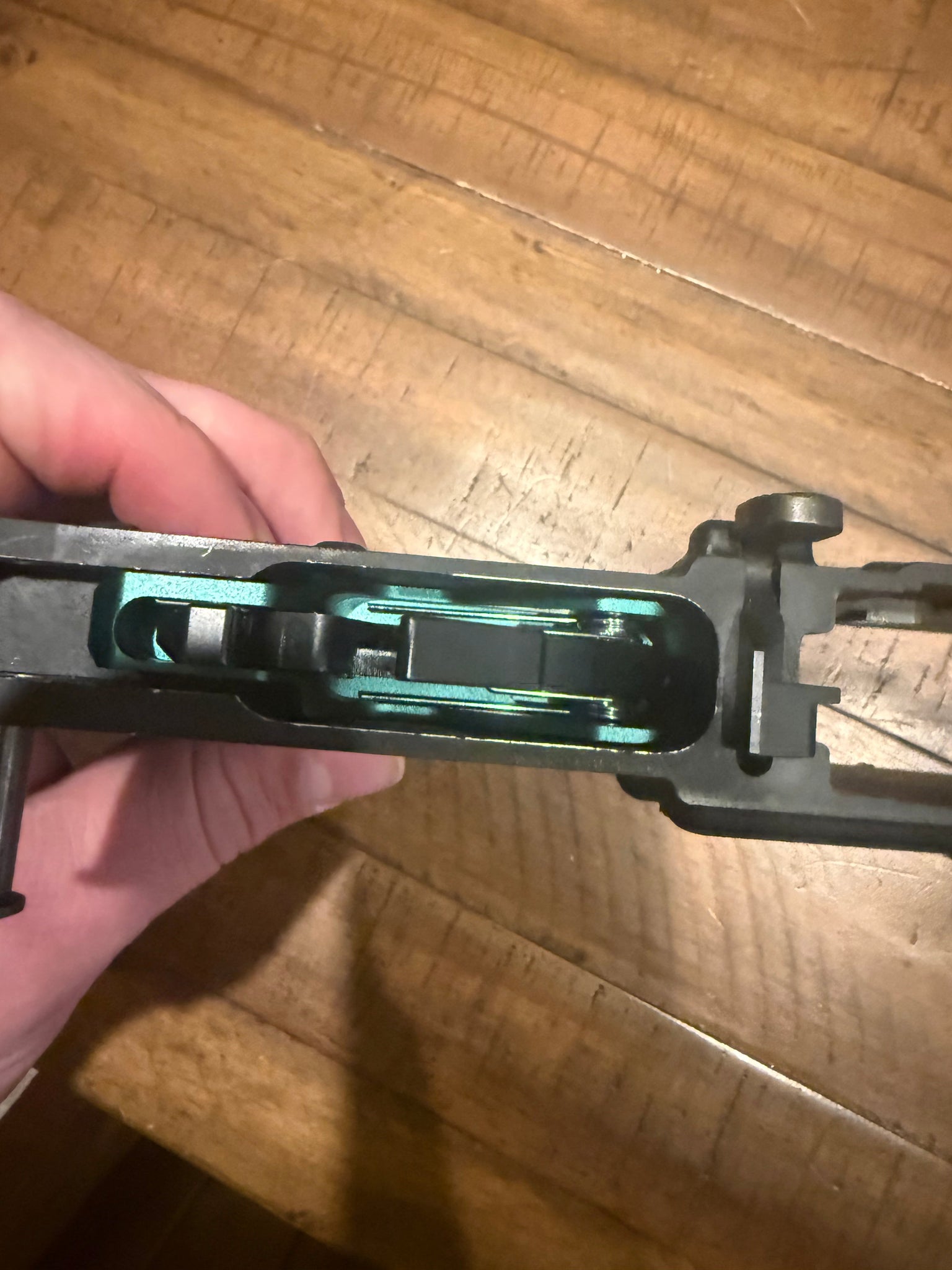
In an MP5 forced reset trigger (FRT) system, the bolt carrier is the mechanical intermediary that re-cocks the hammer, but its true role lies in dictating *when* the sear can re-engage. As the carrier travels rearward after firing, its lower rear surface strikes the trigger tail’s cam, physically pushing the trigger forward into its reset position while the hammer remains caught by the sear. Critically, the carrier’s forward return stroke then releases that cam, allowing the trigger to spring rearward—this release is timed so the sear disengages again only *after* the bolt is fully chambered and locked. Without this precise two-phase interaction (push on rearward travel, release on forward travel), the trigger would either stay locked (no reset) or fire prematurely (out-of-battery). The bolt carrier’s cam timing directly controls the forced reset cycle’s rate limit, since a shorter carrier travel shortens the trigger’s forced forward movement, while a longer travel delays the reset until the bolt is safely home. Any wear on the carrier’s cam surface or the trigger tail’s bearing edge alters this reset point, causing double-fire or bolt-bounce malfunctions. For the MP5 variant, the roller-delayed bolt’s unique inertia profile means the carrier’s rearward velocity peaks later than a direct wot trigger gas system, so the FRT pack must be tuned to match that specific carrier dwell time.
The bolt carrier is the FRT’s timing governor: it forcibly resets the trigger on recoil, then releases it on return, synchronizing each shot’s trigger release with bolt lockup.
Why the Cyclic Rate Feels Faster Without Being Full-Auto
The perceived speed of an MP5 FRT comes from the forced reset timing curve, not from raw cyclic rate. Each shot’s trigger face slams forward before the bolt fully cycles, so your finger is physically shoved back and released in a tight, violent arc. This shortens the “dead time” between rounds—there’s no waiting for a sear to re-engage after a full bolt return. Instead, the bolt’s forward motion actively re-cocks the hammer mid-stroke, meaning the next round fires the instant the carrier passes the reset point. Your brain interprets that abrupt, repetitive shove as faster because the sensation is constant and aggressive, whereas a standard semi-auto’s trigger reset is passive and slower to feel. The result is a high-frequency pulse that mimics full-auto’s cadence without the legal or mechanical full-auto action.
The forced reset’s aggressive trigger return and mid-cycle hammer re-cocking create a sensory cadence that feels faster than the actual bolt speed—delivering full-auto-like rhythm through a semi-automatic pulse.
What Are the Practical Benefits of Running an FRT in an MP5 Platform?
The practical benefit of an mp5 frt setup is that it transforms the roller-delayed platform’s already low recoil into a near-simultaneous trigger reset, letting you keep your support hand glued to the forend while your firing finger rides the curved shoe. In a cramped hallway or during a flat-range drill, that means your sight picture barely dips between shots—the bolt’s inertia does the work you’d otherwise do with a clenched grip. The fastest practical gain is split-time consistency under stress, because you’re not re-indexing your trigger finger after each round; the FRT’s sear trip snaps back before the MP5’s heavy bolt fully returns, so you can dump rounds with the same trigger discipline as a slow squeeze. For a suppressor host, this also keeps your shoulder weld stable, since the cyclic rhythm stays uniform instead of fighting a mushy trigger pull.
Improved Follow-Up Shot Speed for Drills and Competition
An FRT in an MP5 platform dramatically compresses the time between trigger resets, letting you place a second aimed shot before a falling steel target even settles. For drills like the Bill Drill or failure-to-stop sequences, this reduced split-time advantage allows you to maintain sight-picture discipline while cycling faster than a traditional trigger permits. In competition, that translates to shaving tenths off your stage time without sacrificing accuracy—your hands stay on target, and the firearm’s bolt speed does the heavy lifting. You’ll find your follow-up becomes a rhythmic cadence rather than a deliberate pull, turning rapid pairs into a single fluid motion.

- Faster reset means more rounds on target within the same par time.
- Keeps the front sight in the window during recoil recovery.
- Enables smooth transitions between multiple targets without re-gripping.
- Builds muscle memory for high-speed shooting under match pressure.
Shooter Fatigue Reduction Compared to Traditional Trigger Manipulation

With an FRT in the MP5, shooter fatigue reduction compared to traditional trigger manipulation becomes immediately apparent because your support hand and firing grip no longer fight the recoil impulse to reset a trigger shoe manually. The forced-reset mechanism absorbs the bolt’s rearward energy to reset the sear, meaning your index finger only applies a light, constant forward press—eliminating the rapid, jerky extension-and-release cycle that strains the flexor tendons during sustained fire. This translates to less hand cramping and a steadier sight picture across a magazine dump, since your musculature stays relaxed instead of tensing for each pull. Over a training session, you’ll notice your grip stays locked, your wrist doesn’t drop, and your follow-through remains consistent without the micro-adjustments needed for traditional trigger work.
- Eliminates the repetitive finger extension that causes flexor tendon fatigue in rapid fire.
- Maintains a consistent grip pressure because you never break your trigger finger’s contact point.
- Reduces wrist torque and hand tremor by allowing the bolt’s inertia to do the reset work.
- Keeps your support hand from over-gripping to compensate for trigger-induced muzzle dip.
Compatibility With Standard MP5 Parts and Accessories
The primary appeal of an FRT in an MP5 lies in its drop-in nature, meaning it typically requires **no permanent modification to the host firearm**. This ensures full compatibility with standard MP5 parts, including the original trigger housing, hammer, and ejector, preserving the weapon’s factory function. Because the FRT replaces only the trigger pack internals, it works seamlessly with standard MP5 accessories like paddle mag releases, ambidextrous selectors, and suppressors, as none interfere with the trigger mechanism’s cycling. For installation, follow this sequence:
- Remove the factory trigger pack.
- Insert the FRT unit, ensuring the hammer and sear align with the bolt carrier.
- Reinstall the pack and test function with a snap cap.
Finally, standard MP5 grip modules and stocks remain unchanged, as the FRT does not alter external geometry.
How to Install and Tune Your Forced Reset Trigger for Reliable Function
When you first drop an FRT into your MP5, the bolt’s roller-delayed action demands a specific install sequence—start by ensuring the hammer is fully cocked before you align the trigger pack pins, or the reset bar will bind against the sear. I learned this the hard way: a misaligned ejector lever caused double-feeds until I filed the trigger housing’s rear ledge to give the trip’s cam arm a clean 0.5mm gap. For reliable function tuning, adjust the over-travel screw on the trigger blade first—too much slack lets the bolt bounce off the reset nub, producing a dead trigger. Then, tune the FRT’s internal spring tension by swapping the included heavier spring if you run a suppressed MP5, since backpressure slows the bolt’s return stroke. Finally, cycle-test with snap caps, watching the reset lever’s snap-back against the bolt carrier’s cutout; if it drags, polish that contact point with 2000-grit sandpaper only—never cut metal, or you’ll lose the forced reset window entirely.
Tools Needed and Step-by-Step Drop-In Installation Tips
Diagnosing a forced reset trigger (FRT) malfunction in an MP5 platform requires a logical sequence of mechanical checks. Begin with a punch set and bench vise to remove the trigger housing pins, then inspect the FRT’s sear surfaces for burrs using a jeweler’s loupe. For the drop-in installation, first verify the hammer spring is oriented correctly—a reversed spring causes light primer strikes. Second, insert the FRT pack into the housing, ensuring the trigger bar clears the paddle magazine release. Third, apply a thin coat of lithium grease only to the cam track, never the sear. Finally, function-test with the upper receiver off, watching the hammer follow-through; any hesitation indicates binding, requiring selective fitting of the trigger pack’s rear lug with a fine file. Always torque the paddle release screw to 15 in-lbs to prevent walk-out.
Common Ammunition and Lubrication Adjustments to Prevent Malfunctions

For your MP5 forced reset trigger, ammunition selection is the first line of defense against malfunctions. Use full-powered, factory-loaded 124-grain NATO-spec rounds, as weaker 115-grain loads often lack the recoil impulse needed to consistently reset the sear. Avoid subsonic or underpowered ammunition entirely, as they induce sluggish bolt travel and dropped hammer follow-through. On the lubrication side, apply a heavy grease to the trigger pack’s cam surfaces and hammer pivot—not oil, which burns off rapidly. Conversely, keep the bolt carrier group lightly oiled but never wet, since excess lubricant attracts carbon and creates a hydraulic drag that slows cycling.
- Test three different factory brands in 124-grain to find the one with the sharpest recoil curve.
- Lubricate the FRT trip lever and sear engagement points with #2 lithium grease every 200 rounds.
- Run a dry patch through the chamber every magazine to remove powder fouling that mimics ammunition pressure issues.
Break-In Procedures to Ensure Consistent Resets From the First Mag
Before live fire, manually cycle the bolt carrier group over 200 times with the upper and lower assembled, applying light oil to the trigger pack’s sear and cam surfaces. This initial lapping removes microscopic burrs that cause hammer follow. Load only three rounds in the first mag, firing slowly while observing the reset—if the trigger fails to catch, increase slide-forward velocity by switching to hotter 124gr ammunition. Dry-fire the reset mechanism an additional 50 times after each cleaning for the first 200 rounds. Consistent resets from the first mag depend on this deliberate, friction-reducing break-in, not on shooting volume.
Q: What single step prevents first-mag reset failures?
A: Manually racking the charging handle 200 times without ammunition before your first range session, ensuring the trigger’s trip lever fully rotates against its spring.
What Should You Look for When Choosing an MP5 FRT Kit or Component?
When choosing an MP5 FRT kit or component, prioritize the trigger’s reset geometry over flashy materials—a crisp, tactile reset is what defines a functional forced reset trigger. Inspect the sear engagement surfaces for precision machining; any burr or slop will cause hammer follow or sluggish cyclic rates. Verify the kit’s compatibility with your specific bolt carrier group, as roller-delayed platforms demand exact clearances for reliable forced reset. Look for kits with hardened steel trip levers and springs, since polymer parts wear quickly under high-round-count use. Also, confirm the installation requires no permanent modification to your receiver—drop-in, reversible designs are the safest bet.
The best indicator of a quality MP5 FRT is how naturally it returns to your finger without extra pressure; test it with snap caps before committing.
Finally, seek out user videos showing the component running suppressed vs. unsuppressed, as backpressure changes how the reset timing behaves.
Material Quality and Heat Treatment Indicators That Matter
When evaluating an MP5 FRT kit, material quality and heat treatment indicators determine longevity under rapid fire. Inspect the trigger and hammer for a dull, matte finish—a uniform 40–45 HRC hardness without bright spots indicates proper carburizing, not case-hardened surfaaces. Look for machining chatter marks; their absence signals high-grade billet steel, while pitting or discoloration suggests poor quenching. The sear engagement edges should show no rollover or burring after dry cycling—this reveals adequate tempering. Heat treatment consistency across multiple components is more critical than any single hardness test, as uneven zones create premature wear.
- Check for a dark oxide or nitride finish that resists galling on the contact surfaces.
- Verify the bolt carrier’s hammer face retains a crisp square edge without peening.
- Confirm the spring steel in the trigger group returns to shape without permanent set.
- Examine the pin holes for ovaling, which indicates insufficient core hardness.
Spring Tension Settings and How to Match Them to Your Bolt Carrier Weight
Your MP5 FRT’s spring tension dictates bolt carrier speed, so matching spring tension to bolt carrier mp5 frt trigger weight prevents bolt bounce or sluggish cycling. A heavier carrier (e.g., full-mass steel) needs reduced tension to avoid slamming forward too fast, which causes premature reset and trigger reset failure. Conversely, a lightweight aluminum or skeletonized carrier requires increased tension to strip the next round reliably under rapid fire. Tune by starting with the manufacturer’s baseline, then test in three-step increments—if the bolt short-strokes, add tension; if it feels harsh or hammers, back off. Always verify with a full magazine, as friction and lubrication shift the sweet spot.
Q: How do I know if my spring tension is wrong for my bolt carrier weight?
A: If you get intermittent double-fire or a bolt that fails to lock back, your tension is too low for a light carrier or too high for a heavy one. Chronograph your cyclic rate—deviations over 15% mean adjust.
User-Reported Reliability Issues to Ask About Before Buying
Before committing to an MP5 FRT kit, ask owners directly about failure-to-reset under rapid fire, since this is the most commonly reported issue. Inquire whether the trigger pack requires a firmer grip or https://rarebreedtriggertx.com/ specific bolt carrier weight to cycle reliably, as some kits jam with lighter rollers. Ask about feed ramp compatibility—many users report hollow-point ammunition causes stoppages that FMJ does not. Seek feedback on spring fatigue after 1,000 rounds, as worn springs produce double-fire or dead triggers. Finally, ask if the kit runs reliably suppressed or only with the standard configuration. Timestamped video reviews often reveal subtle break-in issues that written posts gloss over.